Jim Beam will not resume distillation at its flagship Clermont, Kentucky facility on the timetable previously expected. The production pause, first announced as a one-year measure in December 2025, is continuing without a firm reopening date as Suntory Global Spirits reassesses production needs and carries out infrastructure improvements. Production of the flagship bourbon has been shifted to the larger Booker Noe distillery in Boston, Kentucky, while Clermont continues to support warehousing, ageing, bottling, visitor experiences and selected craft brands. The update is a useful operational case study because it shows that a facility can be strategically important while one part of its production activity remains offline. For manufacturers, the challenge is to manage the network as a whole rather than treating each site as an isolated asset.
Decision-maker takeaway
Capacity decisions should follow demand, inventory, asset condition and cash requirements. A production pause is not automatically a failure, but it needs a clear network plan for output, maintenance, people, suppliers, customer service and the eventual restart decision.
What changed in the Clermont plan
Food Dive reported on November 17 that Jim Beam would continue its production pause at Clermont indefinitely, after the company had previously indicated that distilling could resume in 2027. A company spokesperson said the business would reassess production needs as forecasts evolve. The company also said the pause allows it to make the best use of its Kentucky distilling network while improving the site’s long-term quality, safety and operational reliability. Global Drinks Intel and other trade coverage reported the same extension, citing statements from Suntory Global Spirits and comments to local media.
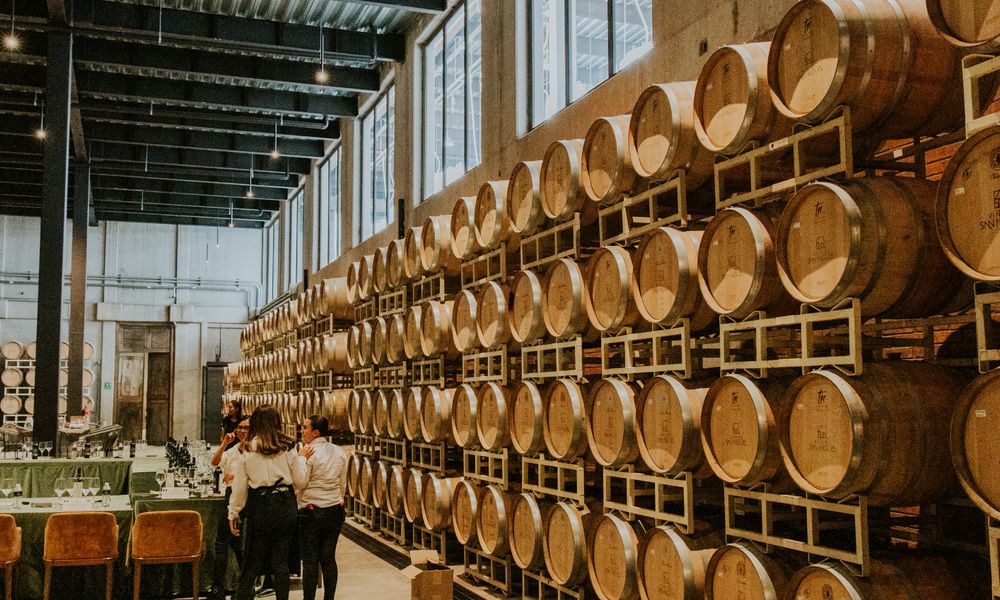
The important distinction is that the Clermont campus is not being abandoned or entirely closed. Jim Beam production has been moved to the Booker Noe distillery, which Food Dive describes as the brand’s largest distillery, with capacity of 45 million original proof gallons a year. Clermont remains active in other ways, including ageing, warehousing, bottling, visitor tours and the distillation of craft brands such as Knob Creek, Little Book and Booker’s. The company said no layoffs were associated with the production pause. That is a more nuanced operational change than a simple shutdown headline suggests.
For leaders, the lesson is to define exactly which activities are paused, which continue and which move to another site. If a company describes a facility as closed without explaining the functions that remain, it can mislead employees, suppliers, customers and local partners. A capacity plan should show the status of each line, process, shift and support function, as well as the dependencies that must remain available while production is consolidated elsewhere.
Inventory can make additional output a liability
Distilled spirits have a long production cycle. Bourbon must age before it can be sold, so a decision to distil more today creates storage, insurance, tax, financing and quality-management obligations long before the product generates revenue. Food Dive cited IWSR data indicating that US whiskey inventories remained around three times estimated annual demand. It also reported that value-tier whiskey volumes declined by 7% in 2025, while global whiskey volumes increased in 2026, with growth concentrated more in premium segments. These figures are industry estimates and should not be confused with Suntory’s own inventory position, but they help explain why a producer may choose to slow one part of its network even while continuing other operations.
Inventory is not just a warehouse number. It is a decision about how much future demand a business is willing to finance today. When forecasts weaken, continued production can increase carrying costs and tie up capital that could be used for maintenance, product development or customer service. When demand recovers, the business needs enough capacity and aged stock to respond without creating a shortage. The challenge is especially acute where products have long lead times, seasonal demand or limited ability to accelerate production.
Manufacturers in other sectors face similar trade-offs even when their products do not require years of maturation. A factory can build finished goods ahead of confirmed orders, a food producer can run long batches to improve utilisation, and an equipment maker can stock components to protect lead times. Each decision creates working-capital exposure. Leaders should distinguish inventory required for service resilience from inventory created by an outdated demand forecast or an overly optimistic growth assumption.
Network optimisation is more than moving volume
Shifting production from Clermont to Booker Noe may improve utilisation of the larger facility, but a transfer between sites is not a simple scheduling change. It can affect raw-material movement, quality procedures, maintenance windows, warehouse space, transportation, packaging, employee skills and the timing of customer orders. A network plan should compare the full cost and risk of producing at each site, not just the nominal capacity of the stills or the hourly labour rate.
Before moving a product or process, operations leaders should map the constraints at the receiving facility. Is there enough tank, line, packaging and warehouse capacity? Are the utilities and environmental permits adequate? Can the site maintain the same product specifications and quality controls? Are critical suppliers able to support the revised schedule? Does the transfer change transport distances or inventory buffers? The answers determine whether a production shift improves the network or simply moves a bottleneck from one building to another.
Companies should also model the opportunity cost of capacity. A site that is used for one product may be more valuable for another product with stronger demand or better margins. Conversely, retaining a smaller facility for specialised products, visitor experiences or bottling may preserve capabilities that would be expensive to recreate. A network decision should consider the value of the whole campus and the options it provides, rather than comparing one site’s output against another in isolation.
Maintenance work can be a strategic investment
Suntory said Clermont would undergo infrastructure improvements to support long-term quality, safety and operational reliability. That matters because production pauses can create a window for work that is difficult to complete while a line is running at full utilisation. Planned maintenance, equipment replacement, electrical upgrades, controls modernisation and safety improvements may reduce the risk of future unplanned downtime. But the work needs a disciplined scope, schedule and acceptance process. A pause without a defined capital plan can become an indefinite holding pattern.
Good maintenance planning begins with asset criticality. Identify equipment whose failure would stop a line, create a safety issue or compromise product quality. Review condition data, failure history, spare-parts availability and supplier lead times. Prioritise work according to the consequence of failure, not simply the age of the asset. Then coordinate shutdown work so that contractors, engineering, operations and safety teams can complete tasks without creating new risks. The restart plan should include commissioning, validation, training and staged ramp-up rather than assuming that a repaired asset can immediately return to normal output.
Capital projects should also have a clear economic case. If a facility will remain underutilised, leaders should test whether the investment is needed to support future demand, preserve specialised capability or reduce risk across the network. They should separate mandatory safety and compliance work from discretionary capacity expansion. The best answer may be to improve reliability without adding more output. In a market with excess inventory, the return on a safer, more dependable facility can be greater than the return on additional production capacity.
Workforce planning must follow the operating design
A production pause affects people even when it does not result in layoffs. Employees may be reassigned, retrained or asked to support maintenance, warehousing, bottling or other locations. Skills that are used daily on a running line can become less visible during a prolonged pause, so managers need a plan to retain critical knowledge. They should identify which roles are essential to restart, which capabilities can support other operations and which training can be completed during the downtime.
Communication is central. Employees need to know what work continues, how assignments may change, what the expected review points are and who can answer questions about the future. Suppliers and local service partners also need clarity about order volumes and project timing. Silence creates rumours and makes it harder to retain skilled people. A regular update that distinguishes confirmed decisions from forecasts is more credible than promising a reopening date that has not been approved.
For a multi-site manufacturer, the workforce plan should include cross-training and redeployment pathways. If one site reduces distillation or assembly, some employees may support maintenance, quality, logistics or another plant. This can preserve skills and reduce disruption, but only if travel, qualifications, labour agreements and supervision are considered. Redeployment should not be treated as a last-minute response after a production decision has already been made.
Demand signals need to be connected to production decisions
The company’s statement that it will reassess production needs as forecasts evolve highlights the importance of a disciplined demand-review process. A forecast should combine shipments, distributor inventory, order intake, point-of-sale data where available, customer plans, pricing and market indicators. It should also show uncertainty. A single number hides the range of outcomes that may affect production, inventory and cash. Scenario planning helps leaders decide what they will do if demand stays weak, recovers gradually or rises faster than expected.
For long-cycle products, the forecast must connect today’s production decision to the date when output can realistically reach customers. Managers should understand the lag between raw materials, processing, ageing, packaging and shipment. They should avoid responding to a short-term sales spike by creating a large volume of inventory that may arrive after the demand window has passed. Conversely, they should not cut production so sharply that they create a future supply gap when customer demand recovers.
A practical monthly review should bring together sales, operations, finance, procurement and workforce leaders. Review actual demand against forecast, inventory by age and product, capacity utilisation, supplier commitments, maintenance status and cash tied up in stock. Agree which production schedules will change and document the assumptions behind the decision. This is more useful than asking each department to produce a separate forecast that never becomes a single operating plan.
Build restart and contingency plans before they are needed
When a facility is paused, management should define the conditions that would justify restarting production. Those conditions may include demand reaching a sustained threshold, inventory falling to a target level, completion of infrastructure work, availability of qualified staff and confirmation that the receiving site cannot efficiently absorb more volume. A restart gate should include both commercial and technical criteria. It should also name who has authority to approve the decision and what evidence must be presented.
Contingency planning should cover the possibility that the pause lasts longer than expected. Identify which customers or products depend on the site, which processes can be transferred, which suppliers may be affected and what alternative capacity is available. Maintain documentation, maintenance records and spare parts so that a restart does not depend on institutional memory held by a few employees. If the facility is used for multiple activities, make sure the paused process does not compromise those that remain active.
Leaders should also communicate the difference between a temporary pause, a structural consolidation and a permanent closure. These decisions have different implications for employees, local communities, suppliers, tax and capital planning. A transparent decision framework helps stakeholders understand what management knows and what remains uncertain. It also gives the company a basis for revisiting the plan when market conditions change.
What other manufacturers can learn
Jim Beam’s extended pause is a reminder that capacity is not automatically an asset simply because it exists. In markets where inventory is high and demand is uneven, adding output can consume cash and increase future risk. The right response may be to concentrate production at a larger facility, use another site for specialist work, invest in maintenance and keep the option to restart when the economics improve. The decision should be evaluated across the whole network, including people, suppliers, customer service and capital expenditure.
Executives can apply the same discipline in manufacturing, food processing, chemicals, consumer goods and equipment production. Build a clear view of demand and inventory. Identify the constraints in the receiving network. Separate maintenance from expansion. Protect critical skills. Set restart criteria. Track cash and service outcomes. Most importantly, ensure that the forecast used by sales is the same forecast used by operations and finance. If every function works from a different demand picture, the organisation will either overproduce or miss customer needs.
The goal is not to minimise utilisation at any cost. It is to use capacity where it creates the most value while preserving the flexibility to respond when demand changes. A well-managed production pause can be a deliberate operating choice. An unmanaged pause is simply uncertainty. The difference lies in the quality of the plan, the discipline of the review process and the ability to turn new evidence into action.
Frequently asked questions
Has Jim Beam stopped making bourbon altogether?
No. Distillation at the Clermont facility remains paused, but production has been shifted to the Booker Noe distillery in Kentucky. Clermont continues to support activities including ageing, warehousing, bottling, tours and selected craft-brand distillation.
Why would a manufacturer pause a facility when it still has customers?
A company may have enough inventory or capacity elsewhere to meet demand while it improves equipment, reduces carrying costs or aligns output with forecasts. The decision should be based on the economics and resilience of the whole network, not on whether a single site can physically produce more.
What should operations leaders define before pausing a production line?
Define the work that stops and continues, alternative capacity, inventory and customer coverage, workforce arrangements, maintenance scope, supplier impacts, restart criteria and decision ownership. Review the plan regularly as demand and asset conditions change.